Stationery 101
Wax Seals on Wedding Invitations: What to Know Before You Add
Them to Your Suite
You’ve been saving wax seal photos since approximately six minutes after you got engaged.
You don’t know exactly what your invitations look like yet, but you know there’s a wax seal on them.
Here’s the thing: you’re probably right. Wax seals are one of the few stationery details your guests will actually stop and notice before they even open the envelope. Done well, they’re worth every bit of the obsession.
But there’s a lot the flat-lay photos don’t tell you. Before you fall all the way in love with the idea, here’s what you actually need to know.
The postal situation is real — and completely manageable.
This is the thing most brides don’t find out until it’s almost too late. Wax seals add thickness and texture to your envelope, which means they don’t always play nicely with postal machines. Depending on the seal size and placement, your invitations may need to be hand-cancelled at the post office rather than run through automated sorters.
Hand-cancelling means a postal employee stamps each envelope by hand. Most post offices will do this if you ask, but it requires you (or your stationer) to bring them in during a non-peak time and specifically request it. It’s worth calling ahead. Some locations are easy. Some are not.
This is not a reason to skip the wax seal. It’s just a reason to plan for it early.
Where you put it changes everything.
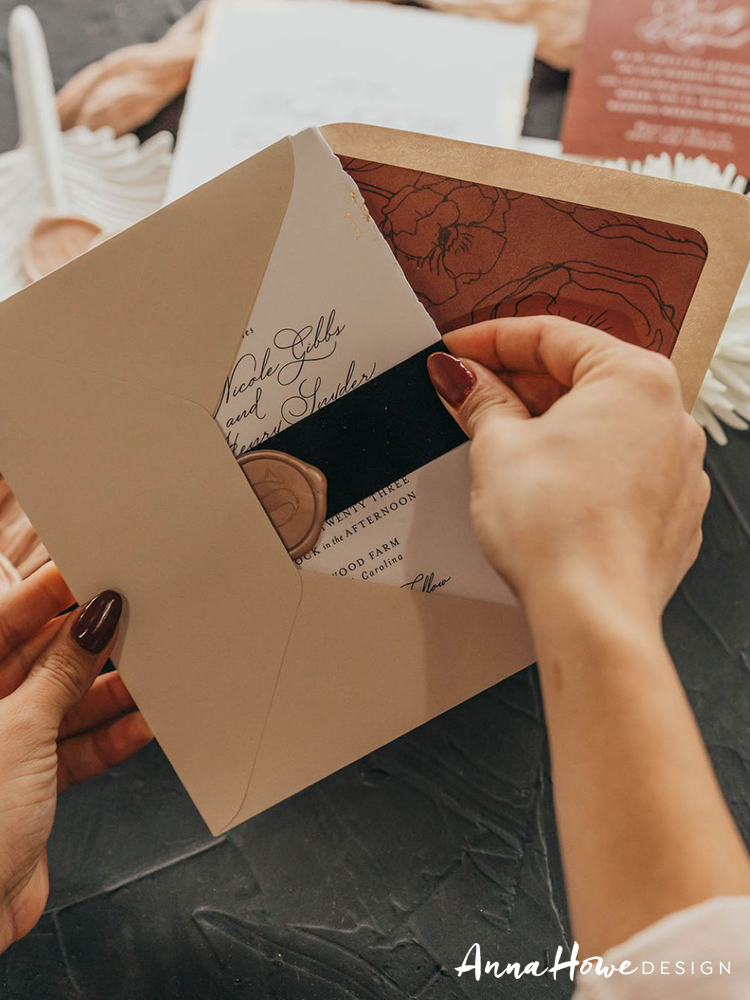
A large seal centered on the back flap is the classic look. It’s also the most likely to catch on postal equipment. A smaller seal placed inside the envelope rather than on the flap itself gives you the same visual moment with significantly less stress.
Seals on the outside of a sealed envelope and seals used as a decorative element inside an already-sealed envelope are both beautiful options. One is just a lot more postal-friendly than the other. Worth knowing before you decide on placement.
There are two types, and both are legitimate.
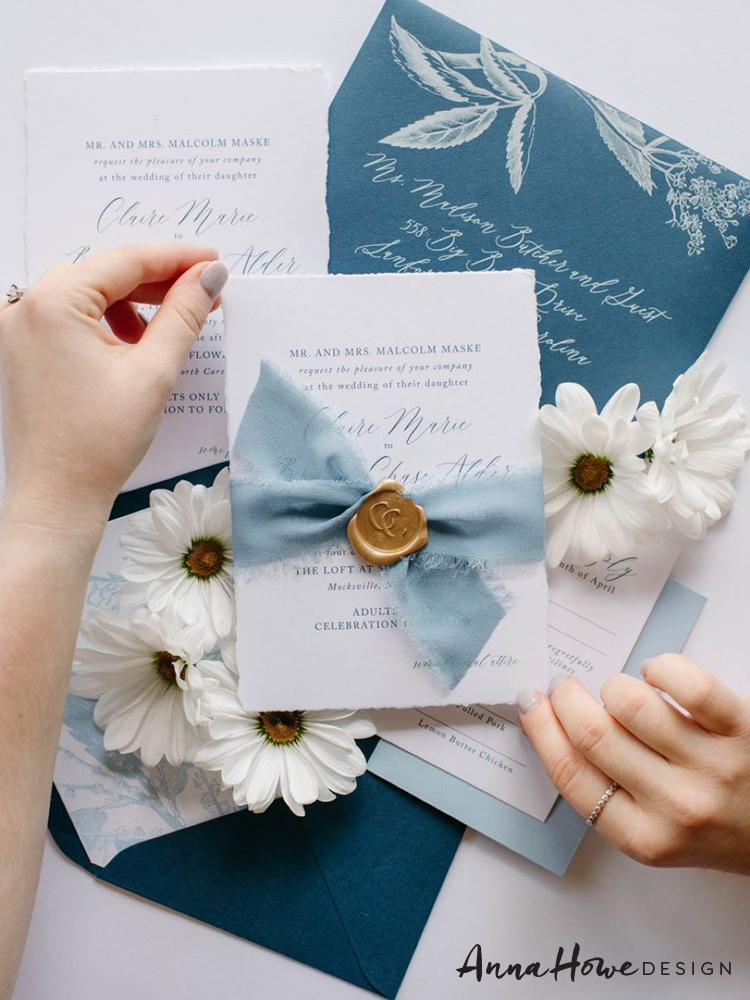
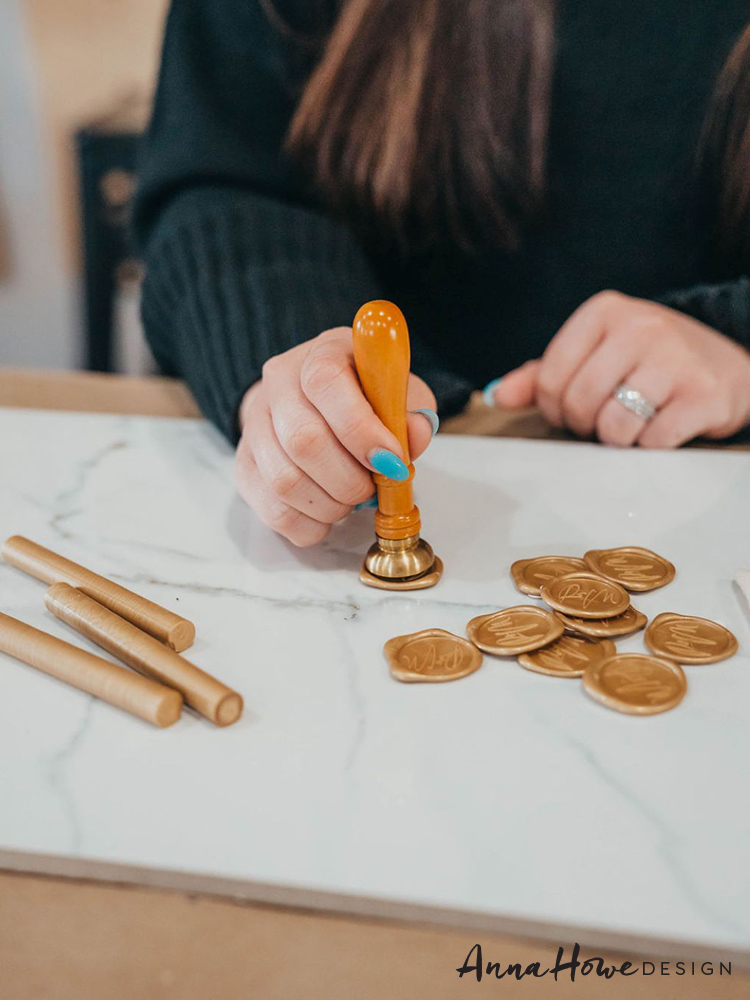
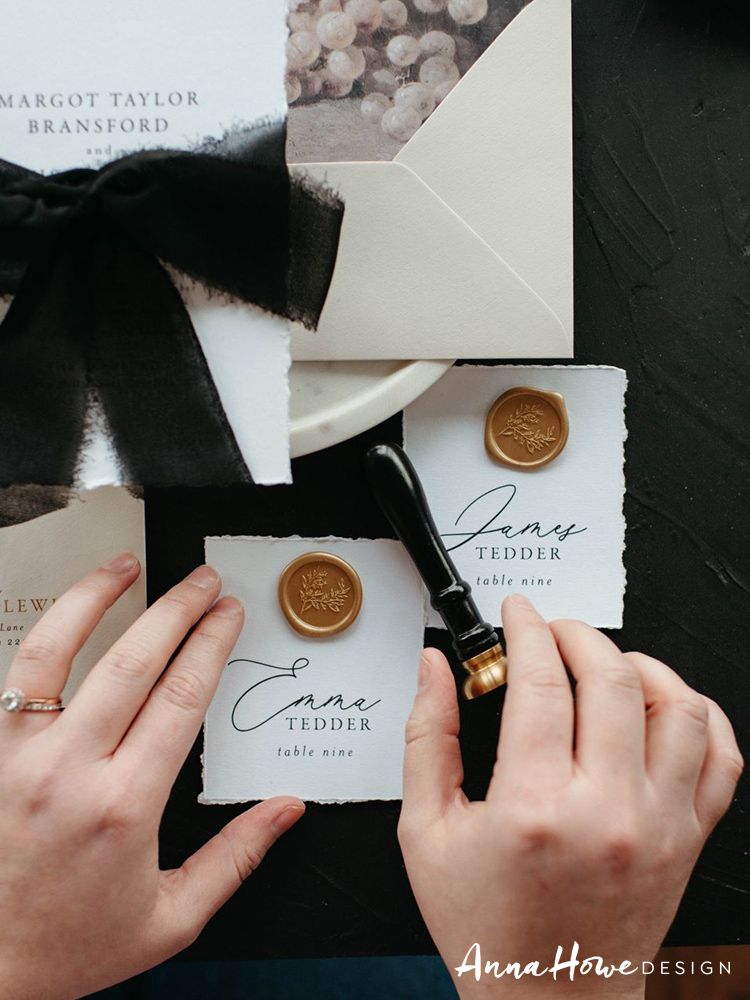
Poured wax seals are made by melting wax directly onto the envelope and pressing a stamp into it while it’s still soft. Slightly irregular, handmade, genuinely beautiful. This is the traditional method and the one most people are picturing.
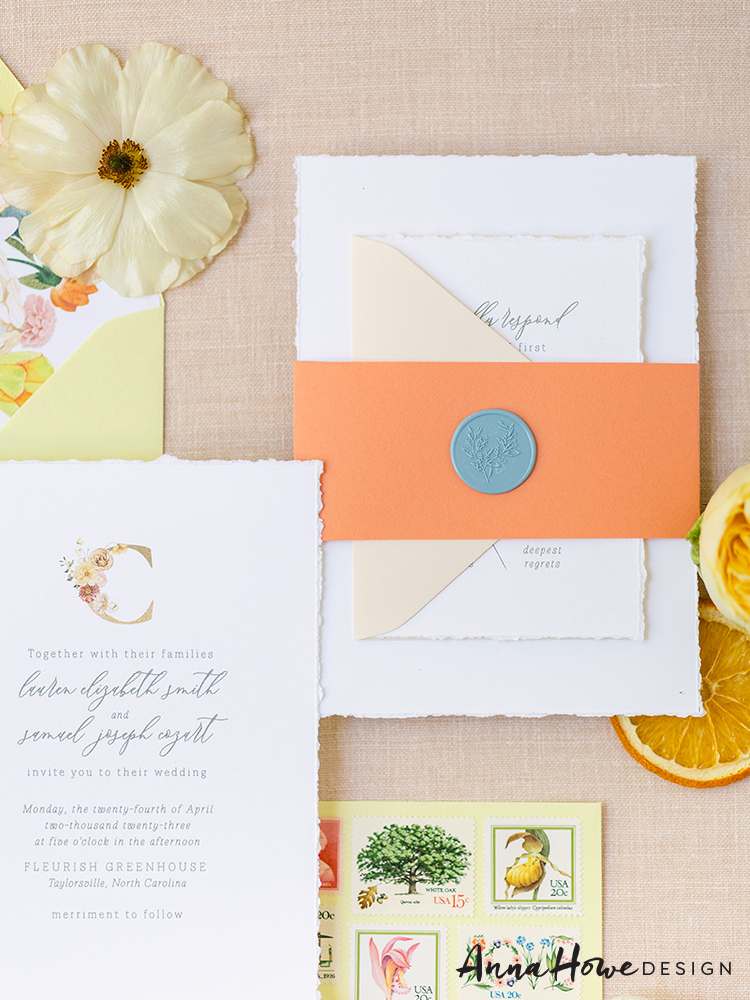
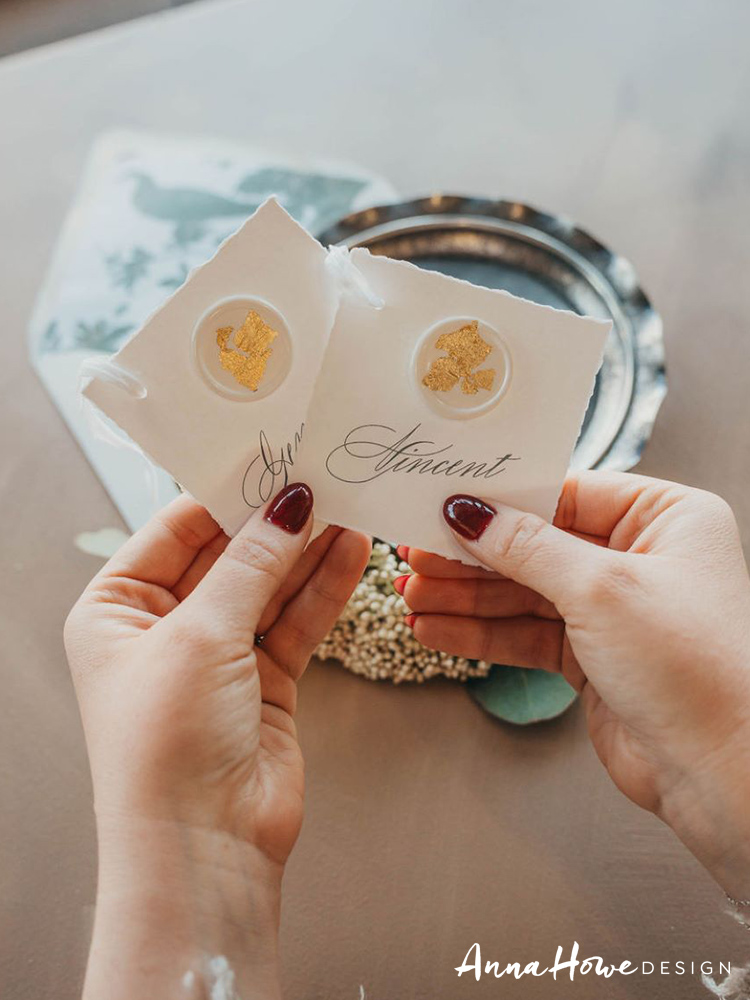
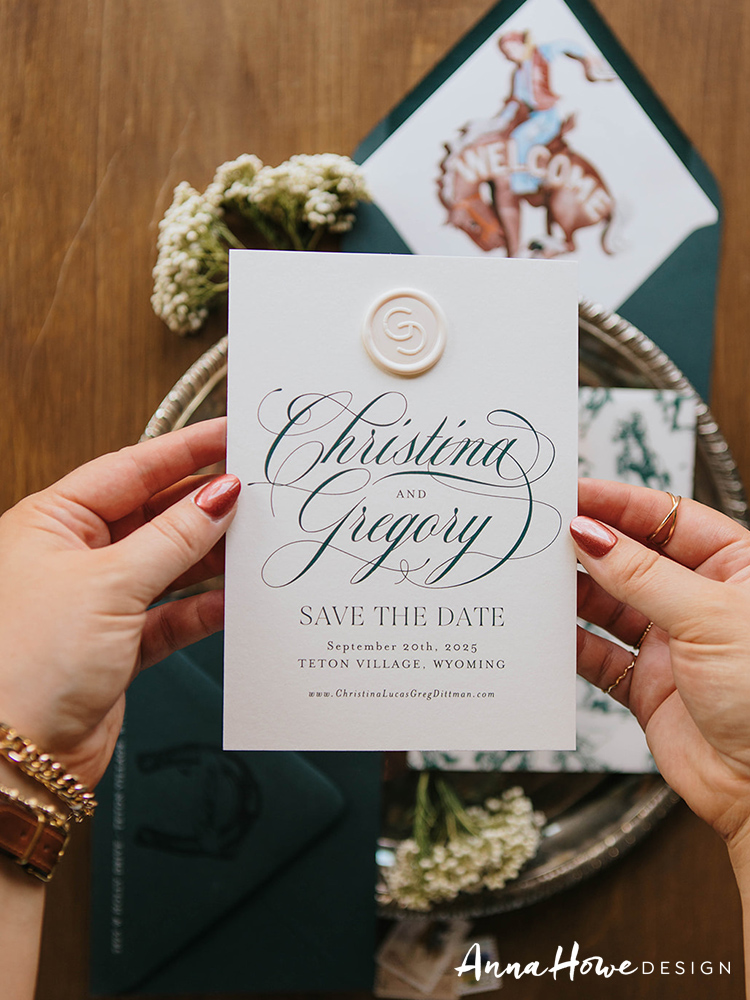
Pre-made wax seals (sometimes called wax stickers) are pressed separately and applied with adhesive. They look nearly identical in photos and are far easier to produce at scale. They’re also more postal-friendly since there’s no raised texture on the outside of the envelope.
If the handmade texture matters to you, poured seals are worth it. If you’re working with a large guest list or a tighter timeline, pre-made seals give you the same look without the labor. Neither is the wrong choice.
Color and finish set the whole tone.
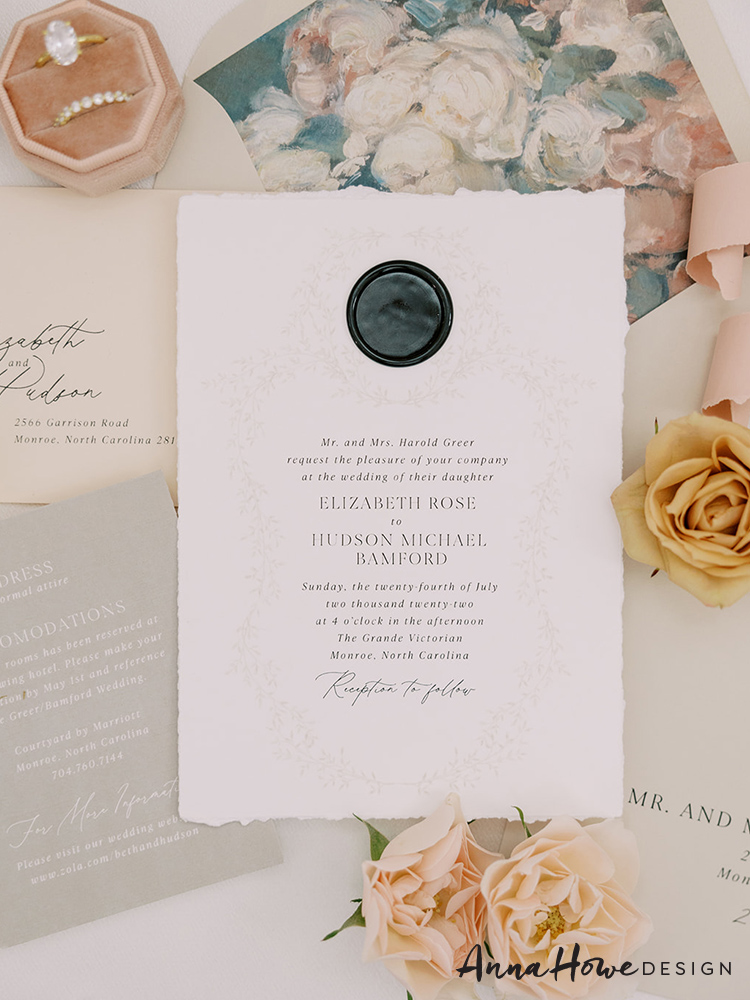
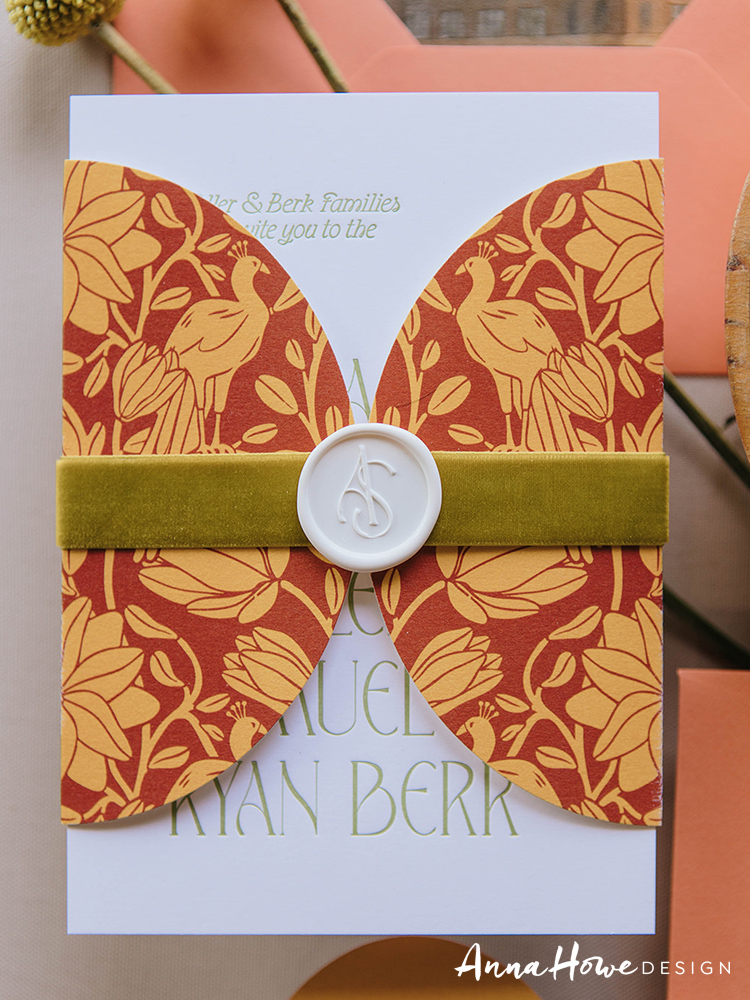
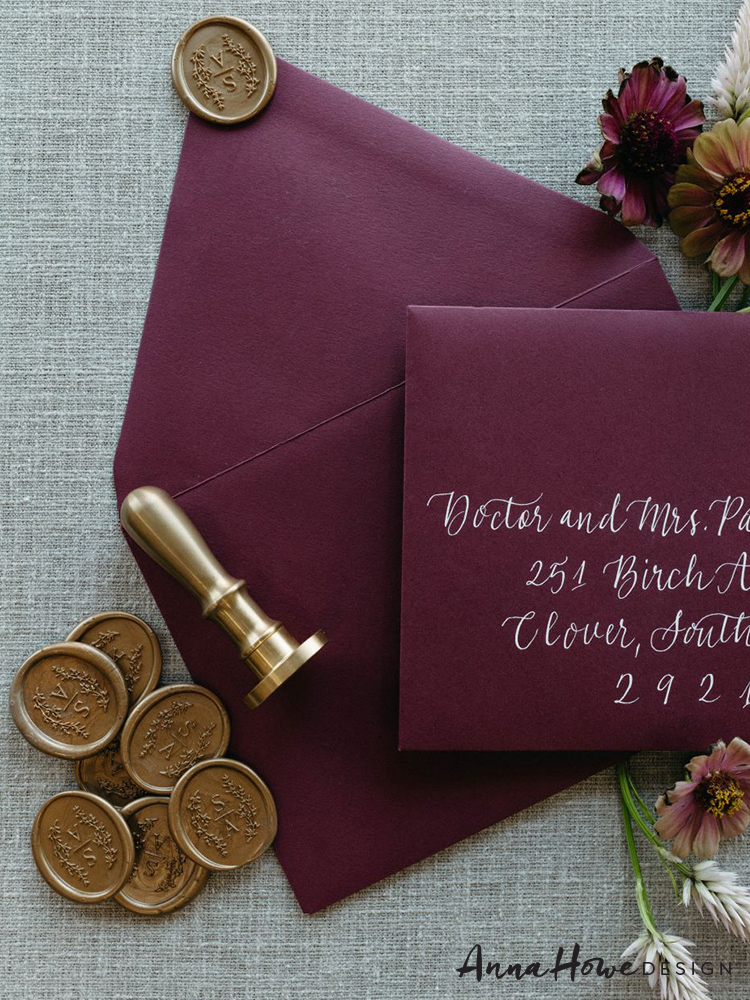
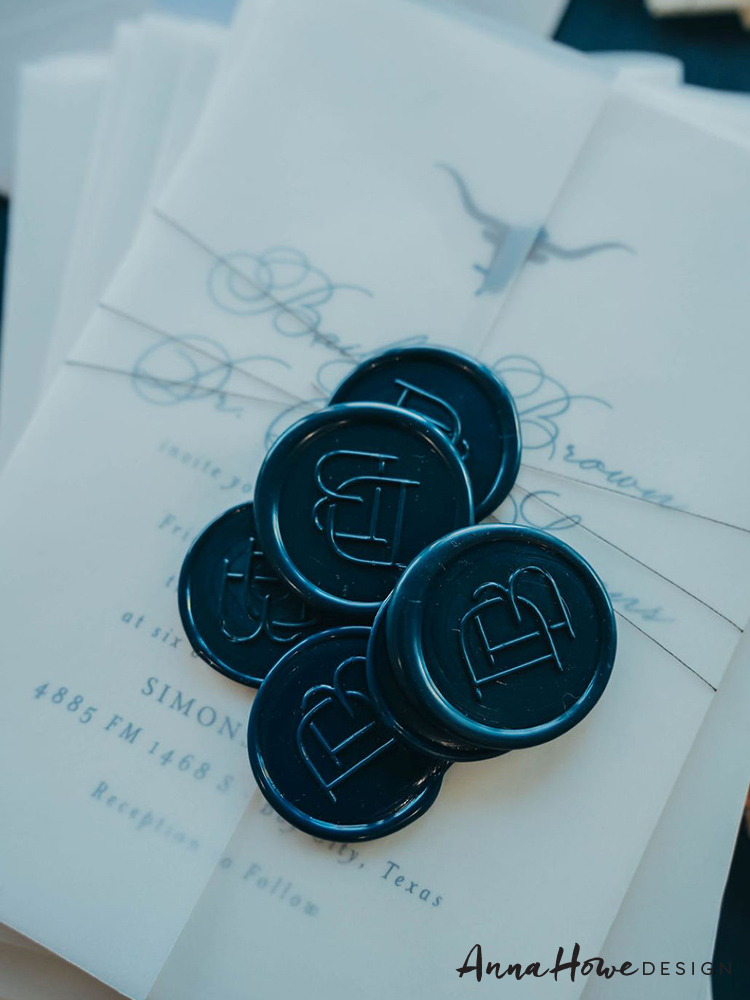
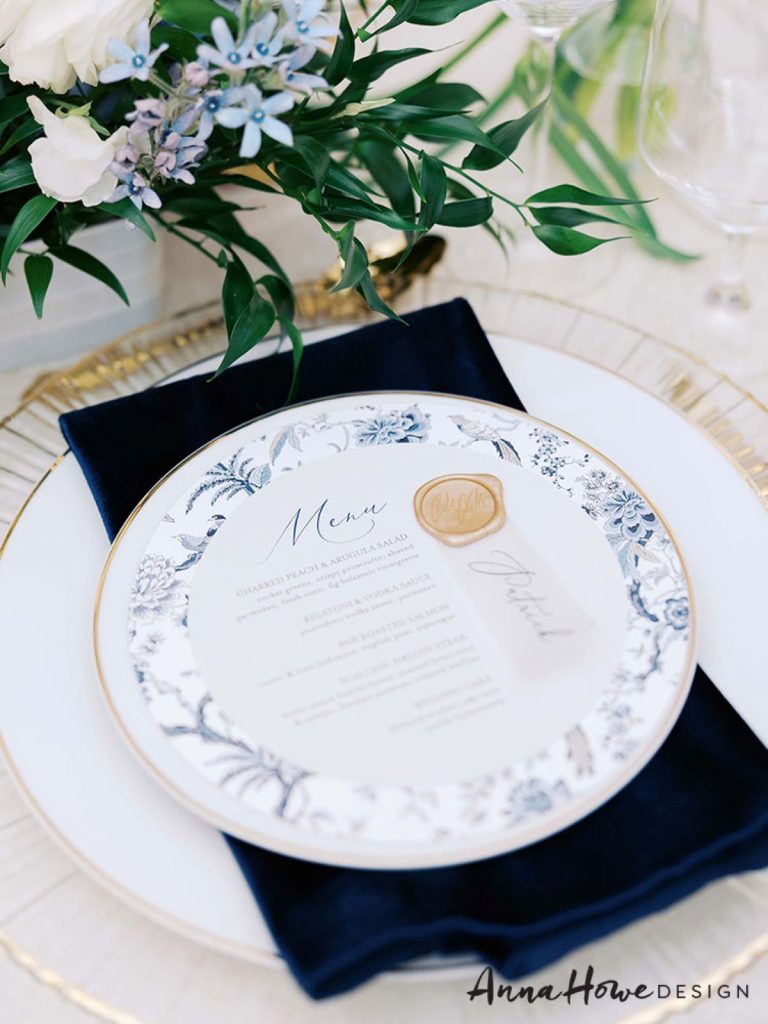
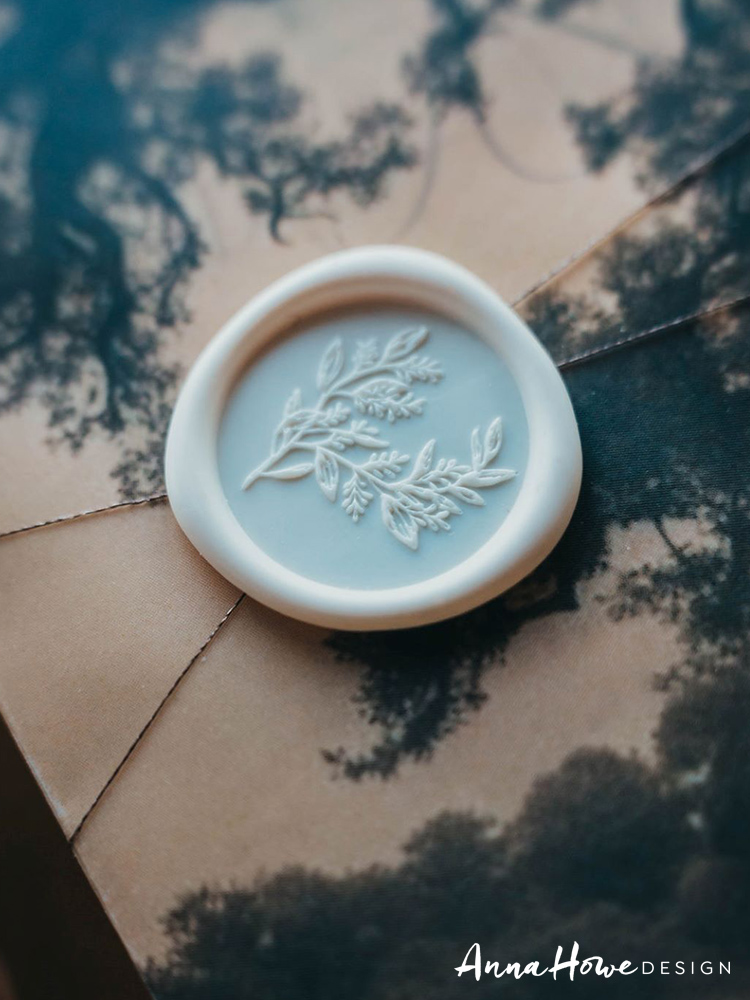
Matte versus metallic changes the mood of the entire suite. A deep burgundy seal reads romantic and formal. Nude or off-white is modern and restrained. A dusty sage or muted terracotta feels organic and intentional. Metallics catch the light and photograph beautifully but can lean more glam than romantic.
The seal color shouldn’t just be your favorite color — it should feel like a deliberate extension of your palette. Think about what’s already on the rest of your suite and work from there. A seal that feels slightly disconnected is more noticeable than you’d expect.
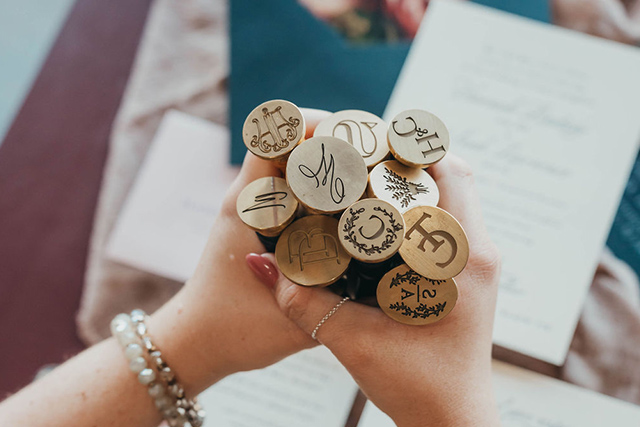
The stamp design is where you can really make it feel cohesive.
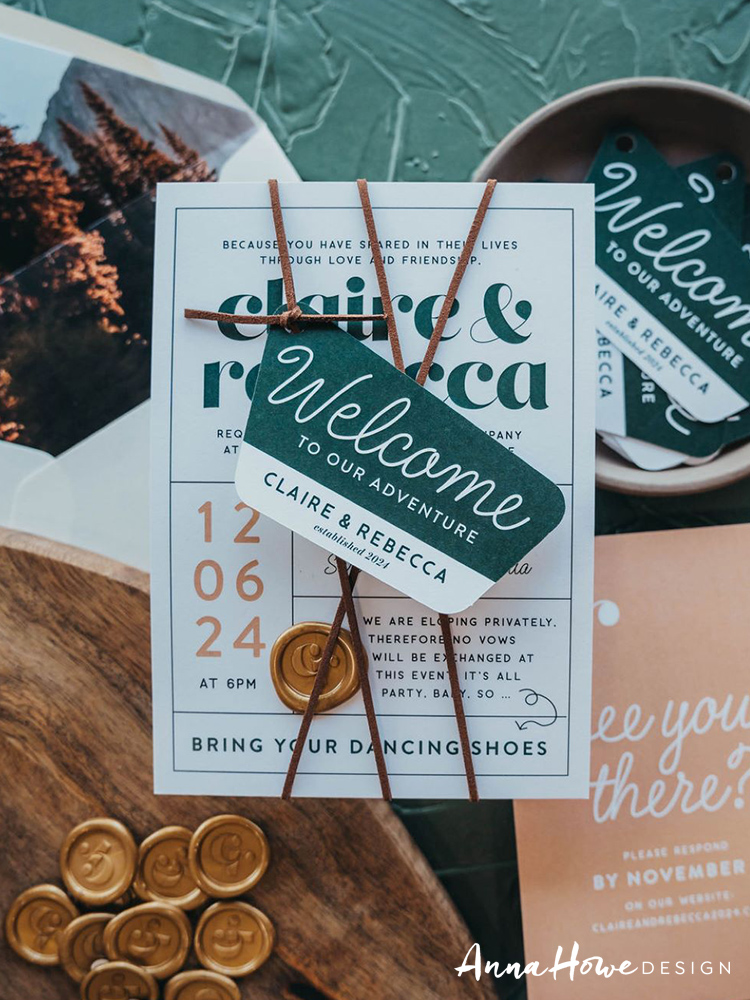
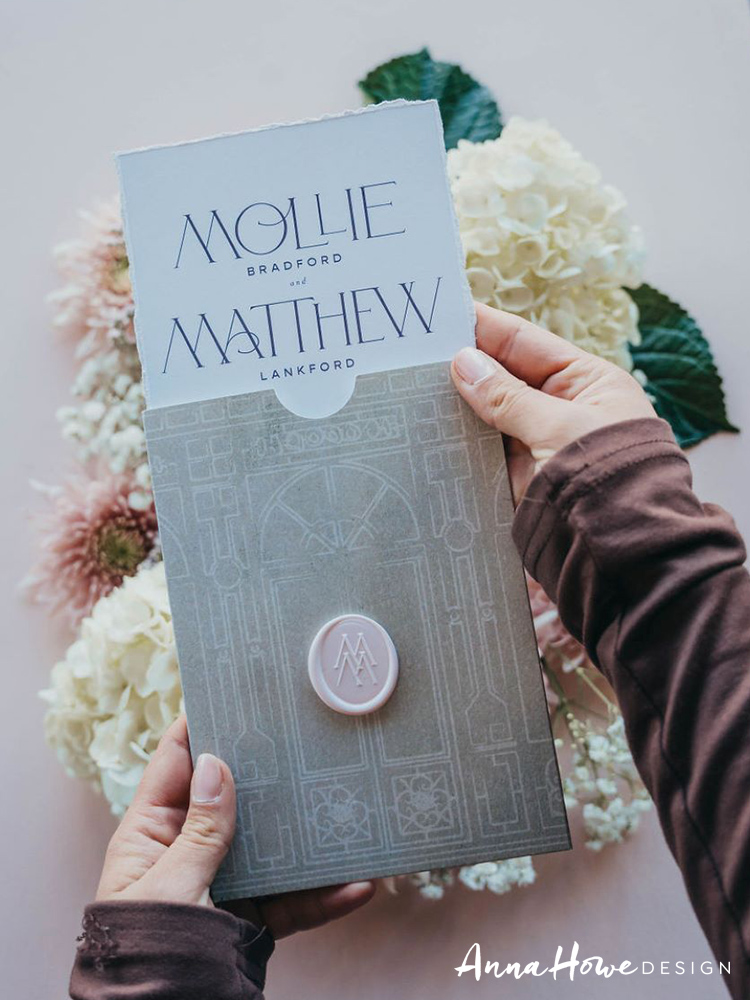
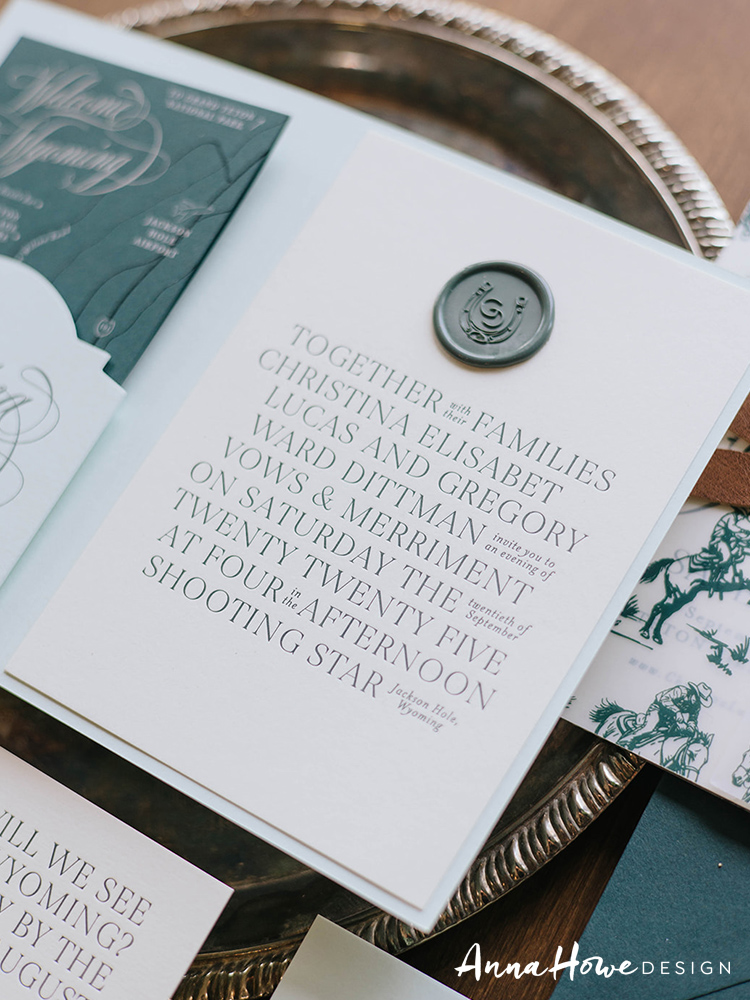
A simple initial stamp is perfectly beautiful. But if cohesion matters to you (and if you’re reading this, it probably does), a custom crest or monogram stamp that pulls from design elements already in your suite makes the whole package feel like it was made to go together.
Think: a botanical element that mirrors your invitation border. An initial style that matches your suite’s typography. A small detail that ties it back. When the stamp feels like it belongs, the seal stops being a standalone add-on and starts being part of the full design story.
If custom isn’t in the budget, a well-chosen initial or botanical stamp is still a considered choice. Just make sure it’s a choice, not a default.
So yes — do the wax seal.
It’s one of the most-kept stationery details there is. Guests notice them before they open the envelope. They show up in photos. They end up in keepsake boxes.
The only difference between a wax seal that works and one that becomes a last-minute headache is how early you bring it into the conversation. Talk through postal strategy, seal type, and placement at the start of your design process, not as an afterthought at the end.
When it’s planned well, a wax seal is one of the best finishing decisions you can make for your suite.
Wondering if wax seals are the right fit for what you’re envisioning? Reach out to us and we’ll talk through what actually makes sense for your design.
Ready to work together on your dream invitations?
The first step is to fill out the inquiry form. You’ll get a no-strings-attached estimate back within 3 business days!